
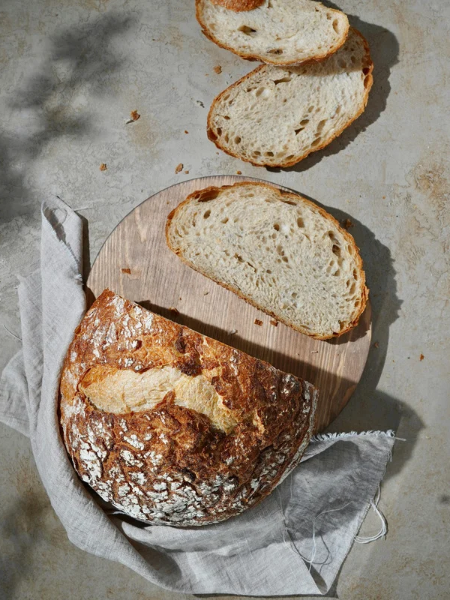
I don’t care if sourdough is something you grew up with, you picked up the trend in 2020 *raises hand*, your first batch of starter is sitting on the counter as you read, or this ends up being the push you were looking for to finally get started. This is a club that I’m proud to be a part of, and I’m even more excited to be in it with you, friend. While I’ve made my fair share of sourdough snafus, forgotten about my starter aaaaaalmost to the point of no return more than once, and most definitely burned a few loaves, this has become one of my most treasured and rewarding pastimes, and I thought it would be fun to put my favorite sourdough recipes all in one place.
Why homemade sourdough is just…um…better
You won’t hear me go so far as to say sourdough is “healthy”, but I do believe out of all the bread options out there, it has more pros than cons. Sourdough still has gluten, which is inflammatory for some and does not get along with others’ guts, and I don’t consider wheat a nutritionally necessary food group (necessary for the soul?…now we’re talkin’!).There are, however, sooooo many reasons sourdough is my staple way to make any and all bread products, and I think you’ll see why it’s worth the hype…and the wait.
Easier to digest. The long fermentation process that makes sourdough, well…sourdough, also partially breaks down gluten and other proteins in the flour before it ever reaches the gut. This means the digestive system has significantly less work to do compared to conventional bread, which is why many people who regularly struggle with wheat find sourdough so much easier to tolerate. It might not be gluten-free, but it’s definitely gluten-friendlier — and for a lot of people, that makes all the difference.
RELATED POST: The Tired & Tapped-Out Girl’s Guide to Improving Digestion
Better for blood sugar. Thanks to that same fermentation process, sourdough has a lower glycemic index than most commercially produced breads, meaning it allows glucose to enter the blood stream more gradually and avoids that spike-and-crash cycle we all know too well. The organic acids produced during fermentation actually change the structure of the starches in the dough, slowing down how quickly your body absorbs them. Translation? It tastes better and is better for your energy, mood, and hormones.
Simple whole ingredients. Peep the ingredients in store-bought bread and attempt to pronounce everything on the list. I’ll wait. Basic sourdough is flour, water, salt, and a live fermented starter (made of flour and water). No dough conditioners, no preservatives, no sugars, no gums. When you make it yourself, you know exactly what’s going into every loaf, and that kind of transparency is increasingly hard to find on grocery store shelves.
RELATED POST: The Whole Food, Healthy Pantry Ingredients You Better Believe I Keep Stocked 24/7
Improved nutrient absorption. Wheat contains a naturally occurring compound called phytic acid (also known as an “antinutrient”) that binds to minerals like iron, zinc, and magnesium and makes them harder for the body to absorb. The good news? The fermentation process in sourdough creates lactic acid bacteria which significantly reduces phytic acid levels, meaning the body can actually access and use more of the nutrients in the bread.
Longer shelf life. If you’ve ever watched a homemade loaf of sourdough sit on the counter for a week without growing a single speck of mold, you’ve witnessed one of its most underrated superpowers. The lactic and acetic acids produced during fermentation create a naturally acidic environment that inhibits mold and bacterial growth… no preservatives required. This means less food waste, fewer last-minute grocery runs, and more time to actually enjoy every last slice.
PS – Perhaps you noticed that it’s the fermentation process that gives sourdough the ability to boast all these benefits. While basic fermentation (rising) can happen within four hours at room temperature, the complex biochemical changes above require 12-24 hours to truly impact your health. So those recipes that call for just a few hours of sitting? They might still taste phenomenal, but these sourdough superpowers will unfortunately not be as successful
My sourdough must-haves
I’m happy to report that sourdough is not rocket science. Sure, it takes a little bit of trial and error to find the recipe that works best for your ingredients of choice and home’s temperature and humidity, but once you get that dialed in, it’s endless sourdough with very little sweat. That being said, you can keep things as simple or special as you like. These are the sourdough “staples” I wouldn’t wanna live without.
My favorite flour – Do I wish I was growing organic wheat berries in my garden and milling them fresh right into the bowl? You betcha! But I’m not to that level quiiiiiite yet. Until then, I’ve found an unbleached, unbromated Italian flour that even the most sensitive of tummies can tolerate, and have successfully used it in every recipe shared here. All those sourdough benefits above mean nothing if your flour is full of bacteria, heavy metals, mold, and pesticides, and this one has proven top quality again and again.
Food scale – The first time I tried my hand at sourdough, I was feeding my starter in equal parts flour and water by the cup rather than by weight. News flash…it didn’t work. From keeping the starter alive to making recipes, I find that weighing the ingredients is the most accurate and effective, and this 22 lb food scale is the first thing I pull out when it’s time to start the sourdough.
Retractable bread lame – If you’re going for a gorgeous “ear” or artisan design on top of your loaf, then you need a bread lame in your life liiiiike yesterday. A lame (pronounced “lahm”, for the fellow non-French speakers in the room) is simply a handle with a razor blade attached, and as a woman who is known to scour her sourdough at 4 AM before she’s even fully awake and a mom who has little hands always rummaging through her drawers, this retractable lame is a must.
The best bread slicer – I’m surprised that I held out on this one as long as I did considering that slicing sourdough is my least favorite part of the whole process. Do not…I repeat…do not make the same mistake I did. This manual bread slicer with adjustable thickness is not only beautiful left out on the counter, it’s the true *must* have of the sourdough toolkit. Uniform slices that actually fit in the toaster and don’t leave half the loaf in crumbs on the cutting board? Once you use it you’ll wonder how you ever lived without it.
A stainless steel bread box – Remember how I mentioned sourdough has a naturally longer shelf life? Well this stainless steel bread box takes that superpower to the next level. Unlike plastic bags or containers that trap moisture and speed up mold growth, this bread box regulates airflow and humidity to keep your sourdough fresh (i.e. crusty on the outside and soft on the inside) for days longer than you’d expect. And you know I found one that your inner Joanna Gaines would find gorgeous as well.
FYI – ^^That^^ is not everything necessary to make a loaf of sourdough. You need a large, wide mouth mason jar for the starter and cheese cloth to go over the top, mixing bowls and dough whisk, good quality salt, banneton for the dough to rise in, and dutch oven or loaf pan to bake in. But don’t let that list of tools deter you. It’s possible you already have many of these items on hand, and anything you don’t only needs to be purchased once and will last you for years and years to come.
The sourdough recipes I make on repeat
Ok, friend, here’s where things get really fun. Once your starter is bubbling, flour is stocked, and tools are ready to go, the world of sourdough opens up in ways that will surprise & delight you. I used to think sourdough was just…bread…a loaf…maybe some toast. But we’ve come so far from those pandemic days (& I’m never goin’ back). From Saturday morning pancakes to pizza night to holiday cinnamon rolls, just about anything you’d normally make with commercial yeast or store-bought dough can be made with sourdough starter (& almost always tastes better). Here are the sweet, savory, and oh-so-satisfying recipes I come back to again and again – the ones that have earned a permanent spot in my kitchen rotation and that I think you’ll love just as much as I do.
THE CLASSIC SOURDOUGH LOAF
This is where it all started (& honestly, I don’t plan on stopping anytime soon). I tried at least ten different sets of rules & ratios before finding this recipe, and unless I do something wrong, it turns out with a crackly, golden crust, a soft and chewy crumb, and that subtle sourdough tang every time. And if I want to turn it into a sandwich loaf, I just follow these instructions. Not a morning goes by that I don’t slice it thick and slather it in butter with a side of backyard eggs…heaven.
PIZZA DOUGH TWO WAYS
Pizza night in the Davis home has never been the same since I started using sourdough pizza dough, and I mean that in the absolute best way. Whether you plan days in advance for this bubbly, chewy crust that was made for the pizza oven (we double it and make 4-5 pizzas at a time) or make this quick discard version that’s perfect for those mid-week pizza cravings, you will never settle for store-bought pizza dough again.
GRAHAM CRACKERS
If I don’t have time to make these before a camping trip, we’re just not goin’! These homemade sourdough graham crackers are everything the store-bought version wishes it could be — slightly sweet, warmly spiced, satisfyingly crunchy, and made with ingredients you don’t mind splurging on. We use them for s’mores around the fire pit, as a base for chocolate pie, and more often than not as a snack straight off the pan. Sloan’s stamp of approval was all I needed to make these a permanent fixture in our kitchen.
BANANA BREAD
I never thought I’d find a banana bread recipe that rivals my mom’s, but this sourdough banana bread just might be it. I substitute coconut sugar for the brown sugar and let it ferment for at least 12 hours in the fridge, but otherwise this perfectly moist, not too sweet, easy to throw together, makes two loaves (!!!) recipe is what I reach for every time those overripe bananas find their way on my counter. I dare you to let this cool before slicing into it.
ENGLISH MUFFINS
When your husband says “these are the best english muffins I’ve ever had” with crumbs falling out of his mouth, you add that sourdough english muffin recipe to your regular rotation. I thought these would be hard to make, but they’re surprisingly straightforward and a batch lasts all week in the bread box. I often double or triple the recipe, put together breakfast sandwiches in bulk, and freeze them for the easiest of mornings. You’ll never have to grab a mediocre Starbucks sandwich again!
PANCAKES & WAFFLES
If you have sourdough discard sitting on your counter (and if you have a starter, you do), these sourdough pancakes and waffles are my favorite way to use it. Light, fluffy, the most beautiful flavor…these have become a Saturday morning staple. I use the same base batter for both depending on what Sloan is asking for, top it with real maple syrup, and enjoy with absolutely zero guilt.
HERB & PARM CRACKERS
Want to impress a party? Put these sourdough crackers in the middle of your charcuterie board. They’re thin, crispy, endlessly customizable with different toppings and seasonings, plus they come together faster than just about anything else on this list. They also happen to be one of the best ways to use up a decent amount of sourdough discard, which makes them both a practical staple and special snack.
HOLIDAY-WORTHY CINNAMON ROLLS
I only make cinnamon rolls three times a year — Easter, Thanksgiving, and Christmas morning — which means when they appear, it’s a very big deal. These sourdough cinnamon rolls (with this honey-sweetened frosting) have become a tradition everyone looks forward to. There’s something about that slow, overnight rise that develops incredible flavor and watching everyone in the house wake up to that sweet, cinnamon-y smell…worth every single step.
RELATED POST: 10 Slow, Simple, No-Stress Traditions You’ll Love This Holiday Season
HAMBURGER BUNS
Well this was a game changer I didn’t see coming. Homemade sourdough hamburger buns will, without a doubt, make the back deck your favorite place to grab a burger. These are soft, slightly chewy, and sturdy enough to actually hold up to a burger without falling apart mid-bite (the worst). Bring these to a potluck and attendees notice, compliments happen, and you’ll feel quietly smug about the whole thing in the best possible way.
RELATED POST: 10 Simple (& Satisfying) Summer Recipes Worth Sharing
Wanna hear something fun? This list only scratches the surface of the sourdough recipes I’ve tried, saved, and fallen in love with along the way. If you want to see everything I’ve bookmarked, experimented with, and added to my “must make next” queue, head over to my Pinterest board where I keep all things sourdough in one place. And don’t forget to hit the “follow” button…I’m always adding and subtracting what wow’s and what doesn’t work.
Get that starter started, friend 😉
You don’t need to know about hydration percentages, crumb structure, or even how fermentation truly works to enjoy everything sourdough has to offer, and I hope this post gave you something useful — a new recipe to try, a tool to add to your wish list, or maybe just the reminder that sourdough is worth every single minute of the process. And if you’re a little overwhelmed by the whole idea of sourdough (no judgement…I was too!), just start with your…um…starter! Everything else follows from there. The recipes will come, the tools will accumulate, the loaves will get better, and before you know it you’ll be the person at the party who casually mentions they made the bread or crackers everyone is asking about. That’s the dream, friend. And I genuinely can’t wait to hear which recipe you try first!
Amanda
Disclaimer: The content provided here does not constitute medical advice, nor is it a substitute for personalized healthcare. I’m a doctor, but I’m not your doctor. If you have concerns about a medical condition, diagnosis, or treatment, you should consult with a licensed healthcare professional.
Disclosure: Some of the links above are affiliate links, meaning, at no additional cost to you, I will earn a commission if you click through and make a purchase. No pressure, but I have a feeling you’re gonna like what I’ve taken the time to put my recommendation behind.


