
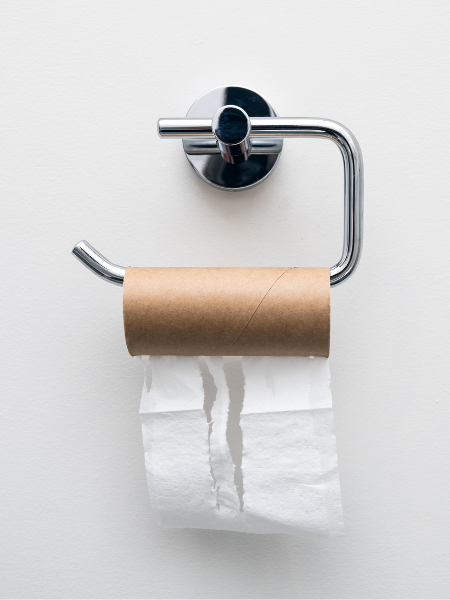
I’m closing in on 150 posts here on the blog (!?!?), and I can betcha more than half of them share [this] sentiment – “common” and “normal” are two very different things. Now…if you look up these words in the Thesaurus you’ll see them listed as synonyms, but ya girl is gonna beg to differ with good ol’ Merriam-Webster, at least when it comes to your bladder.
Recent studies estimate that 50% of women have difficulty controlling their bladder, but 1) that’s not a club I want to be in and 2) we can do better. Just because pee-your-pants laughter is a perpetual punchline and “mommy bladder” is a badge (begrudgingly) worn by many doesn’t mean that is how the body’s supposed to be. What if we stopped gaslighting the leakage, urgency, and frequency as “just a part of getting older” or “it’s been there forever” or “I’ve had a few babies” or “my mom had this too” and drew a line in the sand between what’s widespread versus straight-up wrecking our wellness.
RELATED POST: 5 [Unexpected] Benefits of Making My Pelvic Health a Priority
So many women are silently suffering – struggling with uncomfortable symptoms and sweating through embarrassing incidents – simply because they don’t know any different. They don’t know that common bladder issues should be considered cataclysmic, worth the care, then curable & correctable.
I firmly believe that education is at least 50% of healing in regards to pelvic health. (PS – This is good news!) If you can establish what’s normal and identify where your bladder habits aren’t up to snuff, then all that’s left is understanding how the bladder works (which we’ll get to here…*pinky promise*) and a few simple steps to see success (that I’ll also be sharing too ;)). So let’s get to it, shall we?
The cool thing about the bladder (that you should be taking advantage of)
Ready for a fun fact that might (or might not) be mind-blowing but totally makes sense? The bladder is the only organ in the body that can be consciously controlled. While the heart, lungs, kidneys, etc. run on autopilot #praise, the bladder relies on and responds to your regular routines. Just like we can teach toddlers when and where to go (*literally* called “potty training”), it’s also possible to correct the bladder later in life too.
The bladder is a vessel with a sling of muscles (called the pelvic floor) sitting below it, and both run on a series of reflexes:
- The bladder wall contains stretch receptors that detect when it’s getting full.
- When the bladder fills to a certain capacity, these stretch receptors signal the brain
- The brain interprets that signal and causes the bladder to “vibrate”, creating the “gotta-go” feeling
- Once you’re on the toilet (ideally), the pelvic floor muscles relax and the bladder contracts to expel urine
But here’s the deal – you…me…we have a say in the process every step of the way. We control what the bladder is filling with and at what rate & amount. We (to an extent) control the sensitivity & reactivity of our bladder’s stretch receptors. We control the strength of the signal to/from the bladder & brain. We control when we walk to the restroom and how we spend our time there.
As we dive into the following bladder problems and separate fact from fiction, myth from reality, common from normal, remember ^^this^^. You’re in charge of your bladder (not the other way around) and you not only deserve to have a body you can trust & truly rely on, you can develop it. You only get one bladder…let’s make it one you don’t mind being stuck with.
Urinary urgency
Every person has experienced urinary urgency at one point in life – that “gotta go” feeling when the next road trip rest stop is a little further away than expected, the coffee finally hit and you’re in a Costco checkout line that goes around the corner, or you just don’t want to get up in the middle of the meeting/movie/meal. But when the urge starts going from zero to a hundred in a matter of moments, or the strong, “am I gonna make it?” urge is no longer a rare occurrence but a regular affair, or there’s even a drop of leakage associated with it…Houston, we have a problem!
RELATED POST: Urinary Urgency & Frequency? You’ve Gotta Stop Making These 5 [Big] Bladder Mistakes
WHY IT HAPPENS
There are so many possible causes of urinary urgency, but the most common ones include consuming bladder irritants (think caffeine, alcohol, spicy food, carbonated beverages, citrus, and artificial sweeteners), pelvic floor tension (as this signals the brain that the bladder is full even when it’s not), and not drinking enough water (counterintuitive, I know…but dehydration causes the bladder to become acidic & irritated & increases it’s desire to expel whatever’s inside) or drinking too much liquid for your body size and activity level (yes, this is also a thing).
RELATED POST: Read [THIS] If Coffee Irritates Your Bladder
RELATED POST: 19 Reasons You Have a Tight Pelvic Floor (Plus…What to Do About It)
WHAT’S NORMAL (& WHAT’S NOT)
Waiting to feel the urge to urinate before you actually do is not only “normal”, it’s necessary for optimal bladder function. We call going without an urge “J-I-C-ing” (or going “just in case”) in the pelvic floor world, and this can cause an increase in sensitivity to bladder stretch and a stronger sense of urgency over time. But if you’re (literally) running instead of walking to the restroom, can never unbutton your pants fast enough, or leak (even just a little) before your booty hits the seat, [this] tips the scale to “abnormal” bladder urgency and needs to be addressed.
Urinary frequency
We all have a frequency at which we pee, but there’s a “normal” based on bladder anatomy & function. The bladder fills at about one milliliter per minute, and the average bladder holds about 500 milliliters of liquid (or the size of a grande iced latte). At around half to two-thirds of capacity (250-350 milliliters), the bladder’s stretch receptors signal the brain that it’s getting full, and as a result, we feel that first urge to urinate. If you’re doing the math, then you can see it takes around four hours for the bladder to fill to the point of setting off the stretch receptors.
WHY IT HAPPENS
Many of the more regular reasons behind urinary frequency are the same as that of urinary urgency – consuming bladder irritants, pelvic floor tension, J-I-C-ing, and not drinking the right amount of water for your body – because increased frequency is often a result of excess urgency. And as you find yourself going more often, the bladder’s stretch receptors will become more sensitive, a lower threshold will be created, and you’ll settle into a habit that can be a hard one to stop.
WHAT’S NORMAL (& WHAT’S NOT)
Because bladder volume and size are overall set (yep…there’s really no such thing as a “small bladder”) along with the rate at which it fills, average urinary frequency should be once every 2-4 hours. If you’re going more than that, out of want or need, consider trying to hold it a little longer if possible. Remember, the bladder can be retrained, and allowing it to fill more will mitigate having to run to the restroom what can feel like every minute.
Urinary leakage (aka incontinence)
When urine leaves the body involuntarily, that is incontinence. Even just a little bit should be considered abnormal and something worth finding a solution for. There are three different kinds of incontinence – stress incontinence (leakage with stress to your body like cough, laugh, sneeze, jumping, running, lifting, etc.), urge incontinence (leakage associated with a strong urinary urge), and mixed incontinence (a combo of the two) – and all of the above most definitely fall in the “common but not normal” category.
WHY IT HAPPENS
The pelvic floor muscles play a pivotal part in bladder leakage. Muscles that are too weak or too tight or don’t know when or how to contract will allow urine to pass through the urethra more easily (and at the most embarrassing times), and this can result in anything from just a few drops to having to change your pants. Unfortunately there’s no pad or pill or electromagnetic product that can provide a quick fix – only by improving pelvic floor strength, coordination, and control can you prevent & repair incontinence.
RELATED POST: A Pelvic Rehab Therapist’s Guide to Popular Pelvic Floor Strengthening Tools
WHAT’S NORMAL (& WHAT’S NOT)
Despite what the commercials for all those incontinence products might tell you, leakage is not an inevitable part of maturing, motherhood, or family genetics, aaaaaaand it’s also not something you have to live with. Even a drop of pee on your panties is not passable (IMO), and both my decade of clinical expertise as a pelvic rehab therapist and personal experience have shown that symptoms only slowly & sneakily worsen over time. You shouldn’t have to fear a sneeze or pack your purse with “just in case” supplies or sit on the sidelines…”normal” is running through life (even literally!) without any leakage in sight.
RELATED POST: A Pelvic Floor PT’s Postpartum Story: Leakage, Prolapse, & Tearing
Urinary hesitancy
Let me remind you that the bladder functions as a series of reflexes, many of which we can control. The final reflex takes place on the toilet when the pelvic floor relaxes and bladder contracts to expel urine, and while one normally doesn’t have to think about this process, we do get to decide when & where & how it happens. But when something’s faulty with that final reflex, straining to pee or waiting for the stream to start is the result, and this is called urinary hesitancy.
WHY IT HAPPENS
There’s one primary reason behind a slow or strained bladder stream – tight pelvic floor muscles. While I’ve alluded to this issue a few times already, let me take a moment to remind you that pelvic floor tension is not a good thing. If any other muscle in the body was too tight, it would be a problem, right!? Rushing in the restroom, your posture while peeing, purposefully stopping your urine stream (with kegels), and playing on your phone can all contribute to pelvic floor muscle tension on the toilet and make it difficult for that initial flow to start.
RELATED POST: The Importance (& Power) of Posture for Pelvic Health
WHAT’S NORMAL (& WHAT’S NOT)
When the pelvic floor relaxes, urethra opens, and bladder contracts (in that order), urination should begin easily with little to no thought and flow steadily until you’re done, no waiting or pushing or straining required. While I #preach taking your time in the bathroom (it’s called a RESTroom for a reason!), slowing down for urinary hesitancy is not what I’m talkin’ about. We have so many things we want to do…NEED to do in our days, and spending extra time in the bathroom shouldn’t be holding you back.
Nighttime urination (aka nocturia)
With all the research out there, I don’t think there’s a person in the world who can deny the power and importance of a good night’s sleep. From mouth tape to meditation, cozy sheets to keeping the room cool, blackout curtains to bluelight glasses, we do everything possible to promote and protect our precious z’s. Buttttttt if you’re getting up in the middle of the night to pee, all of ^^that^^ is essentially pointless. Waking up specifically to urinate is called nocturia, and this level of sleep disruption should not cannot be tolerated.
RELATED POST: Your Day Starts at Bedtime: 25 Easy Habits for a Better Night’s Sleep
WHY IT HAPPENS
During sleep, the body produces antidiuretic hormone (ADH) which reduces the amount of urine the body creates at night, but there are still habits and health issues that can interrupt sleep with the need to pee. Nocturia has many possible causes, some of which are easier to address than others. Drinking too much liquid at night or consuming bladder irritants too close to bedtime are the most common culprits (and also the simplest to solve…yay!) followed by poor lymphatic mobility, sleep apnea, and certain medications.
RELATED POST: 7 Surprising Benefits of Simply Putting Your Legs Up the Wall
WHAT’S NORMAL (& WHAT’S NOT)
Because of the ADH described above, “normal” is sleeping until your alarm goes off unless you’re pregnant (thank you, baby, for decreasing bladder mobility) or over the age of 60 (when ADH production starts to slow down), and in those cases, one bathroom trip per night should be plenty. Other than those special instances, we should be spending our nights shifting between sleep cycles and getting quality rest, not shuffling to and from the restroom.
Bladder prolapse (aka cystocele)
We’ve already established that the pelvic floor is responsible for urine control, but it also helps physically hold the pelvic organs (including the bladder) in place. When the bladder and/or urethra start to collapse into the vaginal canal, this is called a cystocele and can lead to pelvic heaviness, pressure, pain, and all of the bladder issues listed above. Every bladder prolapse has a nature (functional vs. structural) and grade (0-4), and varied treatment options depending on where you “fall”.
WHY IT HAPPENS
Hopefully by now you’re seeing there’s *always* an underlying cause of bladder problems…the body doesn’t just freak out for funsies. There are standard sources of a cystocele that every woman should be aware of and they include poor pelvic posture, increased abdominal pressure, pregnancy & childbirth, hysterectomy, menopause & estrogen deficiency, and pelvic floor dysfunction like muscle weakness, tightness, and/or subpar pelvic health habits.
WHAT’S NORMAL (& WHAT’S NOT)
Fun fact – less than 10% of women complain of prolapse symptoms but up to 50% will have one on exam. Wild…I know! But remember (for the 54th time) that “common” does not mean “normal”, and just because half of the adult female population has a prolapse doesn’t mean you need to be a part of that group. A cystocele is not only avoidable, it’s amendable, and your bladder should sit where it’s supposed to no matter your age or how many babies you’ve had.
Obviouslyyyyyyy there are outliers
Please remember that these blog posts are written by a pelvic rehab therapist (hiiiiii…it’s me!), so my information tends to have a musculoskeletal bias as [this] is my bread and butter. That being said, there are other issues and systems that can affect bladder function, and while some of them are not in my wheelhouse, I’d be doing you a disservice if I didn’t mention them here:
Urinary tract infection (UTI). An infection anywhere in the kidneys, ureters, bladder, and urethra can cause many of the bladder problems listed above. While UTIs can be due to bladder and pelvic floor dysfunction, things like gut microbiome, stress, and how you care for your vulva may also contribute. If your bladder issues start suddenly and aggressively, a UTI is more likely to blame and special testing is a sensible first step.
RELATED POST: 7 Unexpected Causes of a UTI & My Favorite All-Natural Ways to Prevent & Treat Them
Interstitial cystitis (IC). Interstitial cystitis (also known as painful bladder syndrome or PBS) is an autoimmune disorder that creates inflammation in the bladder walls. It can be difficult to determine if someone has IC/PBS without extensive testing, but if they don’t respond to conservative treatment for bladder pain, frequency, and urgency, IC is then suspected. Unfortunately there is no known cure for IC, but many can manage it with lifestyle changes and pelvic floor physical therapy.
Diabetes. Diabetes seems to affect nearly every bodily system, and the bladder is no exception. High blood sugar can damage nerves that control bladder function, and combined with increased thirst that often comes with diabetes, urinary leakage, urgency, and frequency can result. If you experience sudden onset of these common bladder problems in conjunction with other diabetes symptoms (extreme hunger, fatigue, blurred vision, weakened immune system, etc.) it’s definitely worth getting your blood sugar checked.
Kidney Issues. The kidneys are directly connected to the bladder by the ureters, and things like kidney stones, kidney infections, and chronic kidney disease can change urinary urge and frequency. When bladder issues come with back pain, fatigue, swelling in the hands or feet, or blood in the urine, those kidneys up the chain may be to blame.
What to do if you find yourself in the “common but not normal” category
If you have bladder issues like leakage, urgency, frequency, hesitancy, nocturia, or prolapse, then you’re struggling alongside more women than you might realize. So the company?…it’s pretty darn good, but the commonality??…noooooot so much. While bladder problems are deemed “normal” by society, especially in those of the female gender, older in age, or with a longer birth history, many women are rightfully wondering if they could/would/should be doing something about it.
RELATED POST: 4 Key Signs You’re Ready to Fix Your Bladder Issues
As a pelvic rehab therapist, it’s my ~obvious~ opinion that you don’t have to live with bladder complaints, mainly because I see my patients resolving their once “impossible” issues on the daily. I also know the mental and emotional toll of living with bladder problems firsthand as I too am a postpartum mama who dealt with all of the above, and those burdens are the last thing we need as the world-changing, wonder-women that we are.
The good news is, you’re never “too” anything to fix your bladder…too old, too young, too active, too sedentary, too far behind, too ahead of the game, too many births, too soon before babies, too busy, too broke, or too beyond help.
So now that your excuses have been eliminated— what are you doing? If you’re not proactively working to improve your bladder and pelvic floor health, you’re missing out on a life free of expensive pad-purchases, less than pleasant roadside restroom stops, avoiding the activities you once loved, and the multitude of negative feelings that come with them.
RELATED POST: 8 Hidden Benefits of Healing Your Bladder
We all have a tipping point, that “enough is enough” line in the sand that forces us to finally take action. If you’ve reached your limit, then I’m officially giving you permission and encouragement to commit your time, energy, and resources to your bladder troubles. There is a realistic & research-backed remedy to the leakage, urgency, frequency, hesitancy, nighttime urinating, and pelvic organ prolapse, but it’s not something you learned in health class (unfortunately), nor can you pick it up by scrolling TikTok.
To heal your bladder and get those hidden benefits in the process, you need a step-by-step roadmap with simple strategies in a specific order for the most success (the same blueprint that’s worked for me and hundreds of my patients). And don’t forget specialized support that’s just a click away to answer your personalized questions and keep you accountable, plus the ease of doing it all from the computer and your favorite corner of the couch – because no travel or appointments means less stress and excuses. And you can get it all in The Bladder Blueprint.
With eight jam-packed video training modules, printable guides, and next-level access to a certified pelvic rehab therapist (again…that’s me ;)), you’ll learn exactly how your bladder works, how to establish pelvic floor strength and control, the techniques to heal your specific bladder concerns, and how to maintain it all for the long term.
Here’s the deal – you could use that search bar on the right to browse through all my other blog posts and probably piece together 80% of the information you need to heal your bladder. But will you take that time and energy, orrrrrrr will you pull out yet another pad and secretly wish you had the accessible & actionable & attainable strategies in the specific order required to achieve true transformation?
The Bladder Blueprint is full of actionable advice for real results, created by a woman who’s been there too, for the woman whose big & beautiful & busy life needs a bladder she can depend on. And remember…it’s not just about less leakage and fewer bathroom breaks (though those are amazing!). It means fully participating in life, sleeping through the night, less pain, better sex, knowledge to pass on to those you love, and my favorite – control, confidence, and certainty in your body.
Only you know what’s best for you, your body, and *ahem* your bladder, friend. But I do know you deserve a bladder you can trust and a body you can rely on. Whether you join me inside The Bladder Blueprint or not, promise me you’ll make your pelvic health a priority.
– Amanda
Disclaimer: The content provided here does not constitute medical advice, nor is it a substitute for personalized healthcare. I’m a doctor, but I’m not your doctor. If you have concerns about a medical condition, diagnosis, or treatment, you should consult with a licensed healthcare professional.
Disclosure: Some of the links above are affiliate links, meaning, at no additional cost to you, I will earn a commission if you click through and make a purchase. No pressure, but I have a feeling you’re gonna like what I’ve taken the time to put my recommendation behind.


